
Text-to-Speech for AI Phone Agents: ElevenLabs vs Deepgram vs PlayHT
Table of Contents
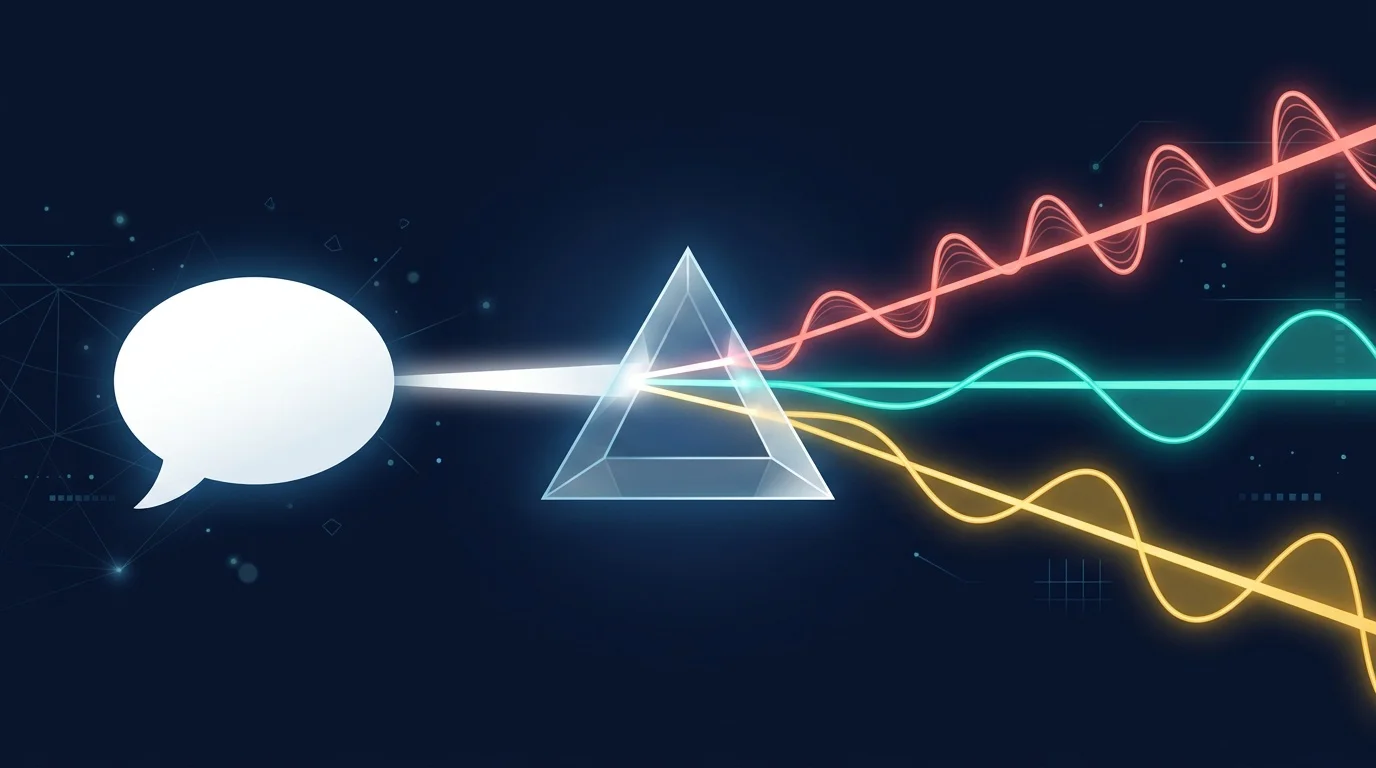
Text-to-speech is what makes your AI phone agent sound human. The wrong TTS choice makes your agent sound robotic and untrustworthy. The right choice makes callers forget they are talking to a machine.
For AI phone agents specifically, TTS has different requirements than for podcasts, audiobooks, or accessibility tools. Latency matters more than maximum quality. Consistency matters more than expressiveness. And cost per minute matters when you are processing thousands of calls.
This guide compares the major TTS options for AI phone agent development and helps you choose the right one for your use case.
TTS Options for AI Phone Agents
There are two categories of TTS available for voice applications:
Standalone TTS Providers
These are dedicated text-to-speech services that convert text into audio. You send text, they return audio. Used in webhook-based voice architectures where call transcription (STT), LLM, and TTS are separate steps.
- ElevenLabs
- Deepgram
- PlayHT
- Google Cloud TTS
- Amazon Polly
Built-In Model Voices
Native audio models like GPT Realtime and Gemini Live have TTS built in. The model generates speech directly from its reasoning output, skipping the text-to-audio conversion step entirely. Used in streaming architectures.
- GPT Realtime voices (alloy, echo, shimmer, etc.)
- Gemini Live voices (Kore, Puck, etc.)
Standalone TTS Comparison
ElevenLabs: Best Voice Quality
ElevenLabs is widely considered the gold standard for TTS quality. Their voices are remarkably natural, with appropriate pauses, emphasis, and emotional tone.
Strengths:
- Most natural-sounding voices available
- Excellent voice cloning (create a custom voice from 30 seconds of audio)
- Strong emotional range and expressiveness
- Good streaming support for real-time applications
Weaknesses for phone agents:
- Highest cost among standalone providers
- Latency is acceptable but not the lowest (200–500ms TTFB)
- At high call volumes, cost adds up quickly
Best for: Applications where voice quality is the top priority — premium customer support, brand voice consistency, high-stakes sales calls where every impression matters.
Cost example: A 2-minute AI phone call generates roughly 400–600 characters of TTS output. At ElevenLabs rates, that is $0.07–$0.18 per call in TTS costs alone.
Deepgram: Fastest and Cheapest
Deepgram entered the TTS market from the speech recognition side. Their TTS is optimized for speed and cost, making it a strong choice for high-volume voice applications.
Strengths:
- Lowest latency among standalone providers (100–250ms TTFB)
- Extremely cost-effective ($0.015 per 1K chars)
- Combined STT + TTS from one provider simplifies architecture
- Good quality for most use cases
Weaknesses for phone agents:
- Voice quality is a step behind ElevenLabs in naturalness
- Fewer voice options
- No voice cloning
Best for: High-volume applications where latency and cost matter more than premium voice quality. Outbound campaigns with thousands of concurrent calls per day.
Cost example: Same 2-minute call at Deepgram rates: $0.006–$0.009 per call in TTS costs. Roughly 10–20x cheaper than ElevenLabs.
PlayHT: Best Balance
PlayHT offers a strong middle ground between ElevenLabs' quality and Deepgram's cost-effectiveness.
Strengths:
- Voice quality approaching ElevenLabs at a fraction of the cost
- Good emotional expressiveness
- Instant voice cloning available
- Streaming support for real-time applications
Weaknesses for phone agents:
- Latency is moderate (200–400ms)
- Smaller market presence means less community support
- Fewer enterprise features than ElevenLabs
Best for: Teams that want good voice quality without ElevenLabs pricing. A solid default choice when voice quality matters but budget is a consideration.
Built-In Model Voices: The Streaming Alternative
If you use streaming mode with native audio models (GPT Realtime, Gemini Live), TTS is built into the model. There is no separate TTS step — the model generates speech directly.
Why this changes everything for phone agents:
- Zero TTS latency: The model generates audio as part of its response, not as a separate API call. Total latency is just the model's thinking time.
- Natural prosody and backchanneling: The model controls emphasis, pacing, tone, and conversational signals based on context, not just the text content.
- Simpler architecture: One service instead of three (no STT → LLM → TTS pipeline, and no separate dialogue management layer to coordinate them).
- Lower total cost: Model pricing includes voice generation. No separate TTS bill.
Available voices:
- GPT Realtime: alloy, echo, fable, onyx, nova, shimmer
- Gemini Live: Kore, Puck, Charon, Fenrir, Aoede, and others
With BubblyPhone Agents, streaming mode uses these built-in voices automatically. You select a voice when configuring your phone number:
PATCH /api/v1/phone-numbers/{id}
{
  "mode": "streaming",
  "voice": "Kore",
  "model_id": 1
}
The cost is included in the model's per-minute rate ($0.04/min for Gemini Live, $0.12/min for GPT Realtime). No separate TTS billing.
Choosing TTS for Your Use Case
High-Volume Outbound Campaigns
Recommendation: Built-in model voices (streaming) or Deepgram (webhook)
At thousands of calls per day, cost per call dominates. Built-in voices in streaming mode have no additional TTS cost. Deepgram's webhook-mode TTS is the cheapest standalone option. Voice quality at this volume matters less than consistency and speed.
Premium Customer-Facing Inbound
Recommendation: ElevenLabs (webhook) or GPT Realtime voices (streaming)
For an AI receptionist or support agent representing your brand, voice quality directly impacts caller trust. ElevenLabs' naturalness or GPT Realtime's conversational voices are worth the premium.
Multilingual Applications
Recommendation: Google Cloud TTS (webhook) or Gemini Live voices (streaming)
Google's TTS has the broadest language coverage with consistently good quality across languages. Gemini Live also handles multiple languages well in streaming mode.
Custom Brand Voice
Recommendation: ElevenLabs or PlayHT
If you need a unique voice that matches your brand (not a stock voice), ElevenLabs' Professional Voice Cloning or PlayHT's Instant Clone are the options. Clone from a sample recording and use the custom voice across all calls.
Latency Impact on Conversation Quality
For AI phone agents, TTS latency directly affects how natural the conversation feels.
Total response time = STT latency + LLM inference + TTS latency. In a webhook pipeline, all three add up. In streaming mode, the model handles everything, and the total is typically under 500ms.
This is why streaming with built-in voices is the recommended approach for AI phone agents. It eliminates TTS as a latency bottleneck entirely.
Frequently Asked Questions
Which TTS sounds the most human?
ElevenLabs currently produces the most natural-sounding standalone TTS. However, the built-in voices in GPT Realtime are arguably more natural in conversational contexts because the model controls prosody based on what it is saying and the conversation flow.
Can I use ElevenLabs with BubblyPhone Agents?
In webhook mode, yes — you control the entire pipeline including TTS. In streaming mode, you use the voices built into the AI model (GPT Realtime or Gemini Live). Most developers find the built-in voices sufficient and prefer the latency advantage of streaming.
How do I reduce TTS costs for high-volume calling?
Three approaches: (1) Use streaming mode with built-in voices — no separate TTS cost. (2) Use Deepgram's TTS for webhook mode — lowest standalone pricing. (3) Keep AI responses short — fewer characters means lower TTS costs. See our guide on AI outbound calls for cost optimization strategies.
Does TTS quality matter over the phone?
Yes, but less than you might think. Phone audio is compressed and bandwidth-limited. The difference between "excellent" and "very good" TTS is less noticeable over a phone call than over high-fidelity headphones. Latency has a bigger impact on perceived quality than marginal voice improvements.
Can I clone my own voice for AI phone agents?
Yes, using ElevenLabs or PlayHT voice cloning. Clone from a 30-second to 5-minute audio sample. This is useful for business owners who want the AI to sound like them, or for creating a consistent brand voice. Note: always obtain consent before cloning someone's voice.
Conclusion
For most AI phone agent developers, the choice is simpler than it appears:
- Use streaming mode with built-in voices for the best combination of quality, latency, and cost. No separate TTS provider needed.
- Use ElevenLabs if you need premium voice quality or custom voice cloning in a webhook architecture.
- Use Deepgram if you need the lowest cost and fastest latency in a webhook architecture.
With BubblyPhone Agents, streaming mode gives you access to GPT Realtime and Gemini Live voices with no additional TTS cost. Configure your voice, set up your agent, and start building.
Get started — see the API documentation for voice configuration options.
Ready to build your AI phone agent?
Connect your own AI to real phone calls. Get started in minutes.
Related Articles

 7 min
7 minSierra AI Alternative: When You Want the API, Not the Enterprise Contract
Sierra is a well-funded enterprise customer service AI with outcome-based pricing starting around $150K/year. For teams that want a phone agent without a six-figure contract, here is the alternative.

 6 min
6 minKore.ai Alternative: When to Pick Something Lighter
Kore.ai serves large enterprises with heavy compliance needs. For most teams, a lighter alternative is a better fit. Here is how to decide.

 5 min
5 minAir.ai Alternative: Developer-First Voice AI Without the Pricing Mystery
Looking for an Air.ai alternative with transparent pricing and a developer-first workflow? A practical comparison of what each platform offers and who fits where.

 6 min
6 minBland AI Alternative: When a Simpler, Cheaper Developer API Wins
Bland AI is a strong voice agent platform, but tiered per-minute pricing and $299/$499 plan floors push developers to look for a simpler alternative. An honest comparison.